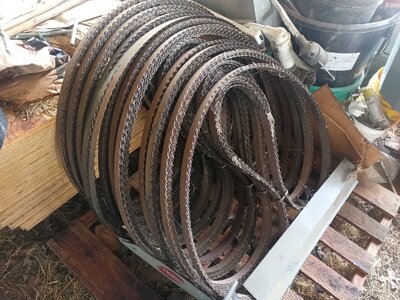
High Quality Chainsaw Bars Husqvarna Toys Hockfire Saws

What is it?

legdelimber

Pinnacle OPE Member
Local time
5:37 PM
User ID
8391
Joined
Jan 14, 2019
Messages
783
Reaction score
1,952
Location
N.C.
Country flag
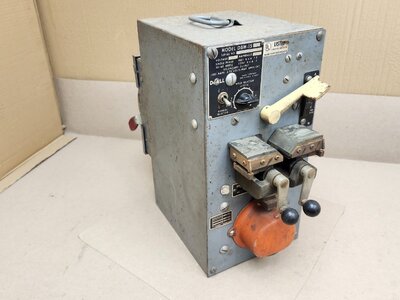
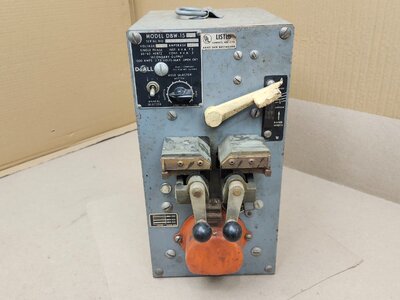
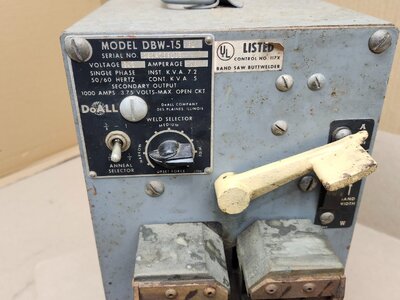
Blade welder. The first seriously large company that I ever worked for had blade welders mounted on the bigger (vertical) saws.
No matter what dept you were in, one of your trial/probation period things was making and repairing a couple of blades.
Was interesting how most folks could get a weld together. But the importance of getting the blade joint straight in the clamps seemed to escape many of them.
Cutting a tight radius with your blade usually thinned the herd though. Snap!
By now, I'd expect lasers and water jets have pushed those band saws into the catch-all building or maybe a toolmakers building.
 

Sawdust Man

Manufacturer of Sawdust
GoldMember
Local time
4:37 PM
User ID
22384
Joined
Jan 22, 2022
Messages
4,556
Reaction score
33,605
Location
MO USA
Country flag
Blade welder. The first seriously large company that I ever worked for had blade welders mounted on the bigger (vertical) saws.
No matter what dept you were in, one of your trial/probation period things was making and repairing a couple of blades.
Was interesting how most folks could get a weld together. But the importance of getting the blade joint straight in the clamps seemed to escape many of them.
Cutting a tight radius with your blade usually thinned the herd though. Snap!
By now, I'd expect lasers and water jets have pushed those band saws into the catch-all building or maybe a toolmakers building.
Interesting, thanks for sharing.

I've never attempted to weld a blade, just buy em in bulk for the sawmill.


Like so......IMG_20231014_103511.jpg
 

legdelimber

Pinnacle OPE Member
Local time
5:37 PM
User ID
8391
Joined
Jan 14, 2019
Messages
783
Reaction score
1,952
Location
N.C.
Country flag
I used to do a little work for a guy who was in Architectural salvage. Lots of re-sawn lumber there.
Probably 25 years ago, I got to met an older gent who had a really nice band mill setup. He reground and reset tooth angles, etc. Very nice workshop.
The ,manual type, tooth grinder was not much different from using saw chain grinder.
He had jigs for setting the tooth angles, all manual equipment.
Similar to sharpening a chain. Slide through clamping jig but using a dial indicator to gauge the tooth offsets as you pressed them sideways with a hand lever.
A torch head station setup to heat treat blade teeth.

One of the biggest pains with re-claimed wood was the ceramic wiring tubes broken off in deep holes. Murder on a band blade to hit 'em.
18" thick beams can hide some trash in the middle and unfortunately no practical way to detect them like we did for metal. Just have to probe out every hole you could find. Drilling hammer and a steel rod. Keep the tip of the rod dressed square or it could skip past smaller bits.
I had strait shank punches for smaller bolt drive outs. Actually kept a slight dimple ground into the tips of those to keep them on the bolts.
 

EFSM

Pinnacle OPE Member
Local time
4:37 PM
User ID
29079
Joined
Apr 30, 2024
Messages
1,301
Reaction score
3,110
Location
Extreme southern IL
Country flag

legdelimber

Pinnacle OPE Member
Local time
5:37 PM
User ID
8391
Joined
Jan 14, 2019
Messages
783
Reaction score
1,952
Location
N.C.
Country flag
How much is it worth? I might be interested. I wonder if welding broken blades is worth it, or if they are about to break somewhere else. Although they tend to break at the welds, so maybe the rest of the blade is fine.
Speaking from metal cutting mostly. I'd say the weld was a bit more common to break. But one or two missing or badly damaged teeth could start that bounce and grab thing going.
During re-sawing old wood, the hidden metal bits could break one though.
We tried to have as much lumber, as possible, already cleaned and prepped when we went to bandmill guy. So I usually wasn't around for much of the sawing time.
 
Last edited:

legdelimber

Pinnacle OPE Member
Local time
5:37 PM
User ID
8391
Joined
Jan 14, 2019
Messages
783
Reaction score
1,952
Location
N.C.
Country flag
How much is it worth? I might be interested. I wonder if welding broken blades is worth it, or if they are about to break somewhere else. Although they tend to break at the welds, so maybe the rest of the blade is fine.
If you aren't losing much more than a little bit needed to get the ends dressed back square and clean, You're probably good.

If you hit something that takes out ten inches worth of teeth...?
Sucks if that happens with a blade on the 2nd cut or so.
Blade will probably be too short for the saw if you just re-weld it.
If you have the welder, you can keep the blade until you get another short one.
Assuming that blade are same kind, Pitch and offset, etc.
And preferably both/all pieces in pretty close to same condition wear and tooth wise.
Now you probably have enough blade material to cut and weld into one band that fits the saw.
Once again, I'll mention nice strait weld joints. A crooked tooth or joint could leave a deeper mark in the board face. Are you gonna lose a bunch of extra stock by having to plane those marks out?

Like almost every danged thing else in the tool box, does it make since for you to own it.
Do you need to fix blade problems "that day" kind of quick?
Does new blade shipping turn into weeks or more and you have a tighter schedule than that?
Are you in a situation that breaks a lot of bands?
Wood that's been dragged around and who knows what's stuck in it?
Is the wood coming from somewhere that people seemed prone to putting things in the tree crotches? Bottles, rocks, critter traps, chains, plow parts, etc.
Sometimes you might not have much choice for culling the wood.

Granted I'm clutching for the extremes mostly, but that's kinda where you need to look and decide if your needs fit in.
The folks who've been off shore or worked in remote areas (like Alaska)?
And yes, You Military Veterans too!
I figure they can tell us about a whole bunch of stuff that steers your needs and choices, That I ain't thought of.

And your band mill might be fossil fuel powered in your location, but will you have a way to power the welder in that location?

I'd bet there are hidden jems in these sort of threads.

Edit: sorry guys, Somehow missed that my attempt to merely link, turned into a copy and paste. I get some truly Weird crap outta this laptop sometimes.
 
Last edited:

EFSM

Pinnacle OPE Member
Local time
4:37 PM
User ID
29079
Joined
Apr 30, 2024
Messages
1,301
Reaction score
3,110
Location
Extreme southern IL
Country flag
Are you in a situation that breaks a lot of bands?
Wood that's been dragged around and who knows what's stuck in it?
Is the wood coming from somewhere that people seemed prone to putting things in the tree crotches? Bottles, rocks, critter traps, chains, plow parts, etc.
We’ve broken 3 or 4 in a couple hundred hours of operation, so I wouldn’t say it’s excessive.
And your band mill might be fossil fuel powered in your location, but will you have a way to power the welder in that location?
The mill is portable, but we have a dozen or so blades and so it wouldn’t be a hardship to take any broken ones to 240v power.

My question is if that welder would turn out a factory quality weld. If so, I can see it paying off over time.
 

legdelimber

Pinnacle OPE Member
Local time
5:37 PM
User ID
8391
Joined
Jan 14, 2019
Messages
783
Reaction score
1,952
Location
N.C.
Country flag
I don't know if the factories are using any sort of shielding gas surrounding the welding zones. That would be my first question about any differences.
But that said, the blades from lennox boxes? I probably could not have picked them out from well done ones from the local Saw and Knife shop that used to be over in the industrial side of town here. Having been in there, I knew they worked in an open shop, no special environments.

Using one is a developed skill, no denying it.
Been since the mid 1980's since I last used one. Forgive me for forgetting some things, please.
Some of them are coming from rather dusty areas of my brain now.

Bumping the Annealing switch could take some practice to get it right, consistently.
Some units had time/current settings that worked pretty well though.

You'll need decent eyesight to tell what you're doing when you dress the weld on the grinder wheel. Looking at color changes of the blade is fairly good bit of info as to what's happening.
You want pretty even looking color across the blade width.
That color matters during welding -and- during dressing the joint on the grinder.
If you're getting crusty welds (oxidized and brittle) The current surge is too much or too long.
Take note of how far down the blade that the color changes are traveling.
The further the color travels and the bluer, the more heat you're getting into the blade.
That color region helps to diagnose a blade for being soft (easier to kink) or hard (think brittle and snapping).
I always had a little eyesight weakness with some colors and hot steel. So I had to just get the muscle memory for the manual timings of some things.

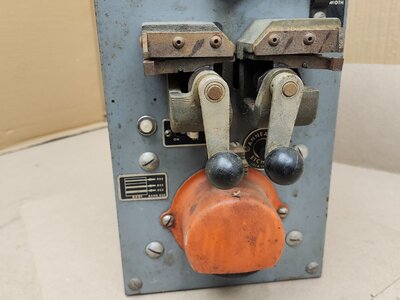
For anyone not familiar, the grinder stone is behind that orange cover. Placed like that means that allows you to get a better look at the blade (below the stone) while you work on the lump.

2nd thing is trying not to hit the teeth themselves. Stay tight on the weld zone.
Skimming a bunch the tooth sides can leave them making a narrower cut in front of the next tooth.
Probably not be significant at all for slabbing logs, but you could definitely feel it when cutting 1/4"~1/2" thick metal.
In Horizontal stock cutting saws...
I've seen factory blades that had a noticeable "bounce" over the joint while making that first cut in 6" steel stock. Those were always the ones to pop way too soon if you kept running them.
The Foreman at one shop told us to stop running a "jumper" and call him over to verify it. He typically pulled those and returned them to the vendor at next order time.
I liked working in that particular place. Small batch fabrication/prototype shop with nice equipment and tooling!

Forgive if I'm making it sound like a horrible job to do, I'm just trying to cover any of the little stuff that can make or break the usefulness of a good tool.
Anything I can cover, will hopefully get the next user off to a better footing.
 
Last edited:
Top