- Local time
- 6:37 PM
- User ID
- 6578
- Joined
- Jul 2, 2018
- Messages
- 719
- Reaction score
- 2,850
- Location
- Alaska, USA

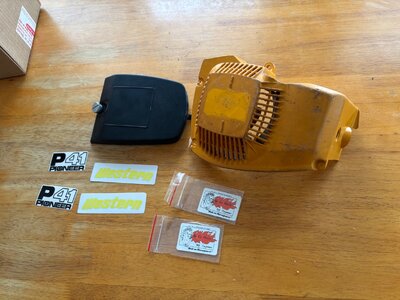
It’s a preheating kit, so the intake can pull some of that warmer air off the cylinder.What’s the plate on the side for?





It’s a preheating kit, so the intake can pull some of that warmer air off the cylinder.What’s the plate on the side for?


Didn't think about the level being wrong in the carburetor, flush is where the needle level should sit on them.So, on my 242xp issue…
I got to thinking… the carb kits have an inlet valve lever that sits well above he level of the carb body. The Walbro gauge I have lists this type of carb as being level with the top of the carb body. So, I bent the lever down to meet that spec.
I wondered why the kits, however, had levers that were well above that level.
Today I tried setting the lever at level with the body including the gasket. It wasn’t as proud as they came, but…
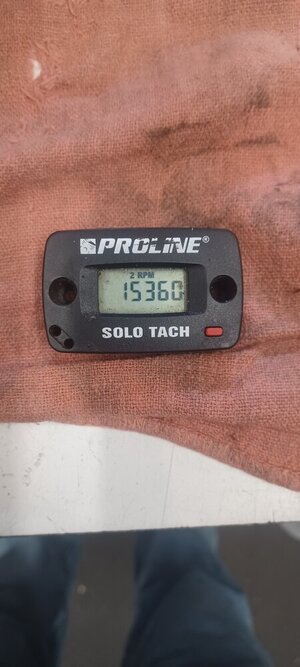
I got a consistent 14,6 rpm’s at 3/4 turn out on the H screw. It was late so I didn’t push the noise factor with my neighbors. I’ll try going to 1/2 turn and then try using an “as is” lever from another kit and see what happens.
The he plot thickens…

As far as AM kits go, sometimes things like the little button on the inlet diaphragm being present or not can be an issue.So, on my 242xp issue…
I got to thinking… the carb kits have an inlet valve lever that sits well above he level of the carb body. The Walbro gauge I have lists this type of carb as being level with the top of the carb body. So, I bent the lever down to meet that spec.
I wondered why the kits, however, had levers that were well above that level.
Today I tried setting the lever at level with the body including the gasket. It wasn’t as proud as they came, but…
I got a consistent 14,6 rpm’s at 3/4 turn out on the H screw. It was late so I didn’t push the noise factor with my neighbors. I’ll try going to 1/2 turn and then try using an “as is” lever from another kit and see what happens.
The he plot thickens…
Kits didn't have new springs so reused the old one, needle is exactly the same. Button is exactly the same.As far as AM kits go, sometimes things like the little button on the inlet diaphragm being present or not can be an issue.
If a replacement spring was more likely than not is the wrong rate.
When the inlet lever was readjusted implies the new inlet needle is a different height. If too great a difference is made the fulcrum point is changed and alter things.
Somewhere there is a minor detail that is putting the snafu on your project.
Other tips that may help are, wet the gaskets prior to installation with fuel mix so they can swell and seal up properly, and pressure test when completed to 7PSI/ .5BAR to ensure there's not a leak causing trouble.
This may sound silly, but without the benefit of having it in my hot little hands... how is the polish on the barrel?Kits didn't have new springs so reused the old one, needle is exactly the same. Button is exactly the same
What barrel?This may sound silly, but without the benefit of having it in my hot little hands... how is the polish on the barrel?
The inside part of the carburetor leading up to the venturi.What barrel?
Ah, will checkThe inside part of the carburetor leading up to the venturi.
They are mirror polished when made, and while they won't remain so forever, a dull look is okay, but a rough "weathered" finish could give troubles.Ah, will check
they look normal to me. can try a nos filter as well.They are mirror polished when made, and while they won't remain so forever, a dull look is okay, but a rough "weathered" finish could give troubles.
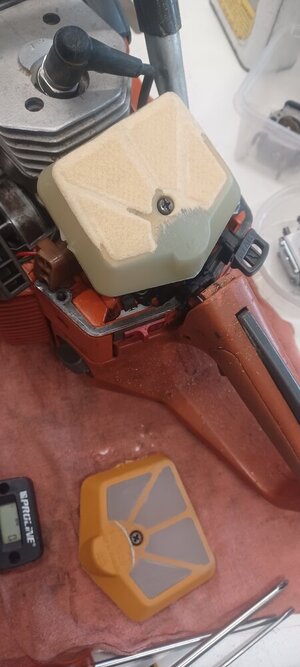
One other thing to note, the next time you run it, try so with the air filter removed to see if it is impeding air flow. Sometimes they can look nice, but be stomped up inside enough to be a problem.

Well...it seems to like a fleese filter rather than the fine mesh.They are mirror polished when made, and while they won't remain so forever, a dull look is okay, but a rough "weathered" finish could give troubles.
One other thing to note, the next time you run it, try so with the air filter removed to see if it is impeding air flow. Sometimes they can look nice, but be stomped up inside enough to be a problem.
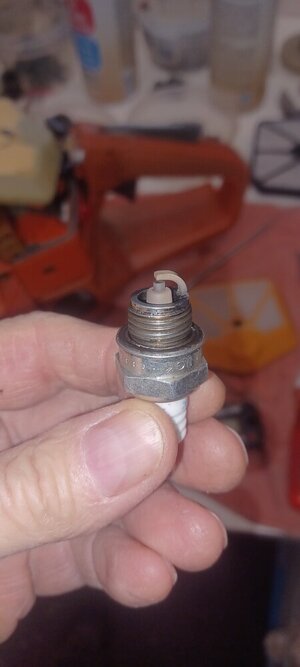

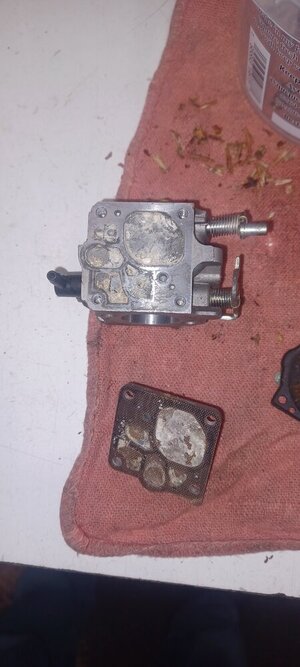
Whether to save it or not depends on how rare the carburetor is. Hitting that with a sandblaster and polishing the face would bring it right around, but there might be damage to the needle seat.

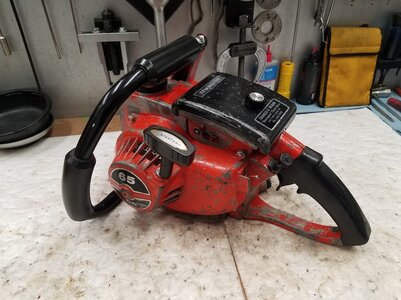
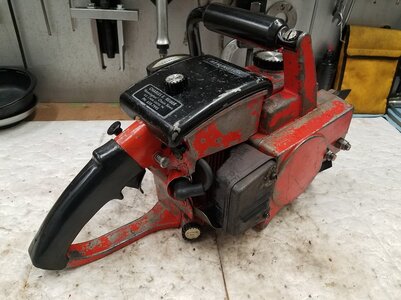
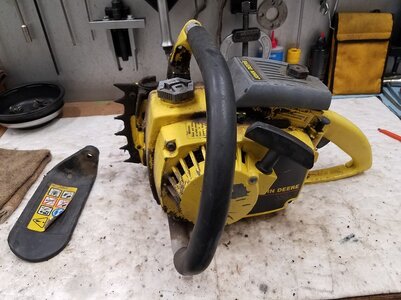
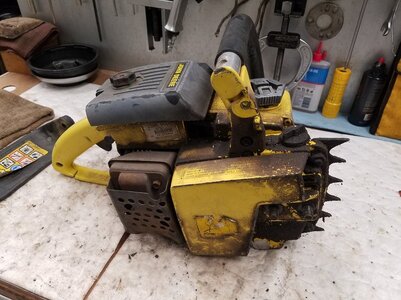
The corrosion is localized to that one section. I wire brushed a lot of it off after quite some time in the sonic tank. But, how much is in the top passages that I can't get to?Whether to save it or not depends on how rare the carburetor is. Hitting that with a sandblaster and polishing the face would bring it right around, but there might be damage to the needle seat.
By top passages you mean the mix needle passages? Usually corrosion doesn’t affect them as much because they aren’t sealed like the pump chambers.The corrosion is localized to that one section. I wire brushed a lot of it off after quite some time in the sonic tank. But, how much is in the top passages that I can't get to?
Early 066 carb.
I can get the larger ones with carb brushes. The tiny, .030 passages into the body of the carb, not so much.By top passages you mean the mix needle passages? Usually corrosion doesn’t affect them as much because they aren’t sealed like the pump chambers.

I run a wire from a repair tag down into those as far as I can.I can get the larger ones with carb brushes. The tiny, .030 passages into the body of the carb, not so much.