Traditional lead-acid (flooded) battery vs AGM battery has different charging specifics, albeit the same 3-stage bulk/absorption/float stages:
- AGM requires a higher voltage at 14.7 and specifically between 14.6-14.8v to properly fully charge to 100%
- Flooded has a wider tolerant window which can be anything above 13.0v to 14.5v, not going above 14.5 and preferably I think not above 14.2 otherwise you'll boil the water in the [flooded] battery.. and make your basement smell like sulfuric acid and make any cloth/clothing hanging around fall apart after a little while.
- the old kmart charger wouldn't account for the 14.7 higher voltage of AGM and likely undercharge it
- AGM requires lower absorption voltages around 14.2v vs flooded which is then up around 14.7; read about absorption stage this is often tricky and which actually kills any battery if done wrong
- using a Flooded battery smart charger that doesn't know about AGM and using it on an AGM if it does an absorption stage will kill an AGM battery
- the float/maintenance voltage stage for both is around 13.2 to 13.5v
then you got a cheap battery. no different than a flooded traditional lead-acid battery, if it's lighter than others then you got cheated on lead mass inside which directly relates to battery capacity. AGM internal [lead & sulfuric acid] chemistry is the same as the traditional lead acid battery. my ~2005 DieHard AGM boat battery, still going, weighs a lot more than any you will find at autozone/advance even the optima reds, that was when Diehard AGM was made by Odysee and back then it was over $200. A bettery battery will always weigh more if you acknowledge physics and the density of lead.
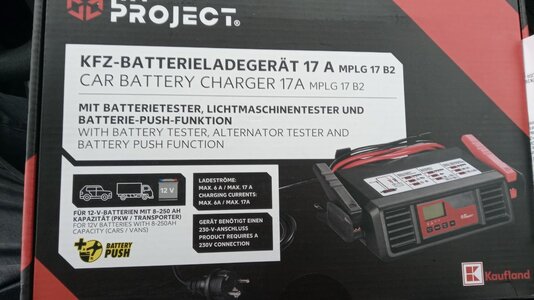
you completely misunderstand the charging cycle and limitations of lead acid batteries. False advertising maybe, as they oversold capabilities using tricky wording. But to properly charge a [car] battery it takes at least 8 hours. You can only push 10 amps, and even up to ~50 amps, on the bulk charging phase of the battery which recharges it from 0% up to no more than 80%. From 0% to 50% is when you can do the "boost charge" on those old (or new) cart chargers used in auto shop. When battery is above 80% is when you need to "trickle charge" it maintaing correct voltage as I descibed and reducing amperage down to 2.0 amps or less... which is why you see so many 1.0 and 2.0 amp chargers on the market - they can be small and still do bulk charging it just simply takes longer. **batteryuniversity.com** has good read on the topic.
that would be a DC-to-DC "converter" not "transformer. It would be sized to be in the 1hp to 2hp range, for which car/truck starters are rated at 1.0kw and 1.4kw and 1.7kw last I knew for the small to medium sized starters used today up to the 5.7L/350.... the starter on my 2006 8.1L is a 1.7kw. The 6.0L to 7.3L diesels are 3.0 to 4.0kw starters from what google tells me, so you would need a "DC converter" rated for that kind of kw the load would be. If a 1.7kw 12v starter drew 500 amps, then a 6v starter would draw 1000 amps to achieve the same output... it is not a simple watt = volt x current as the starter initial locked rotor draw amperage is very high and there is no electrical resistance when the starter is not spinning at first. After cranking for a few seconds and the initial shock load reduces to constant effort then the starter could maintain its rated 1.7kw (~2,2hp) rating at ~140 amps. So you would need a DC converter to handle those ranges of currents for whatever duty cycle for a engine starter load... google "who makes or sells a 2hp rated 12v to 6v DC converter tolerating 500 amps surge". Otherwise yes there are 12v to 6v DC converters that can handle < 10 amps, called a step down converter... "buck" or "linear". But from a battery's CCA rating perspective that "CCA" rating of the battery would not be affected.










![DSCN1666[1].JPG](/data/attachments/483/483357-d8a4980e1ec1f707e8a8543c904d964e.jpg?hash=dprlECx-gB)