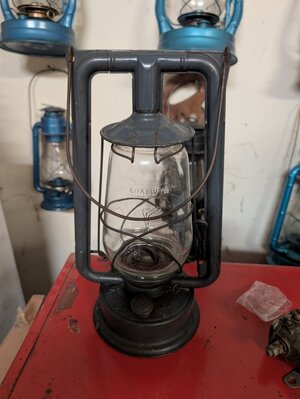
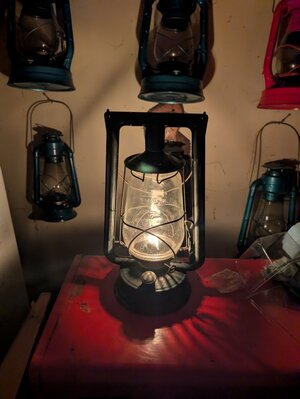
As far as I know, kerosene and lamp oil/paraffin oil are the only fuels that a wick lantern are intended to use. The biggest problem with alcohol is that it's hygroscopic and draws moisture from the air. Meaning, not only will the fuel be contaminated but the metal will corrode pretty quickly. The Chalwyn design is called a hot blast lantern. Supposedly, the heat from the chimney pushes air through the tubes and into the burner producing a cleaner and brighter flame. Most Dietz lanterns are the cold blast type, where the air tubes are indirectly connected to the chimney on the sides, with the heat pushing cooler outside air into the tubes. Railroad and signal lanterns without tubes are called dead flame types, the only oxygen the flame receives is through the vent holes around the burner. These lanterns were intended more for signaling than to actually provide illumination, and so making the lantern simple, rugged, and compact was the primary concern. See my previous post with my Adlake C&O railroad lantern.







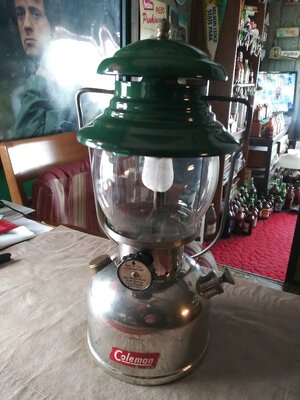
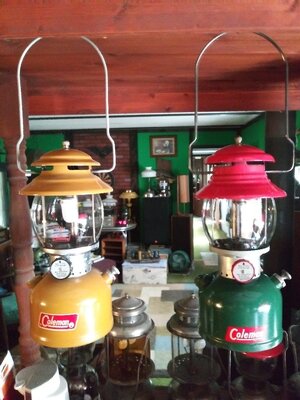
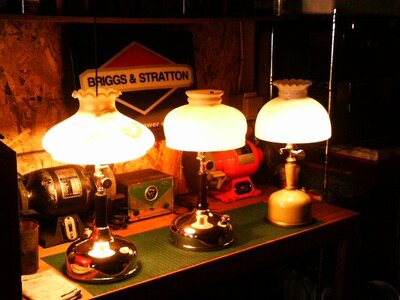


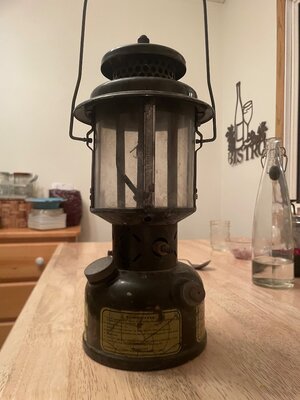
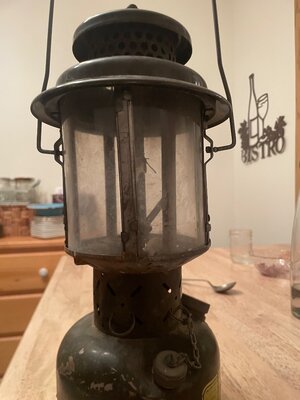
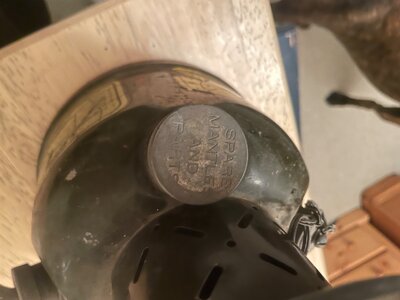
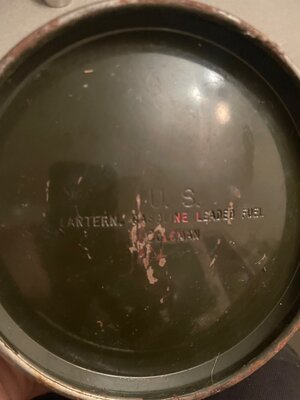
 ) I do believe the alcohol was always in one of the glass type "table" lamps.


